By Rodolfo Elías
Ringo Starr has turned 83 this month. So I want to use it as an excuse to celebrate a life marked by charm, hard work, and success. All gathered in the person of this man, who can be considered real rock ‘n’ roll royalty and a living legend. And by charm, I don’t mean lucky charm. Because, contrary to some people’s belief, it wasn’t luck that got Ringo so high in life; but something very different: talent and perseverance.
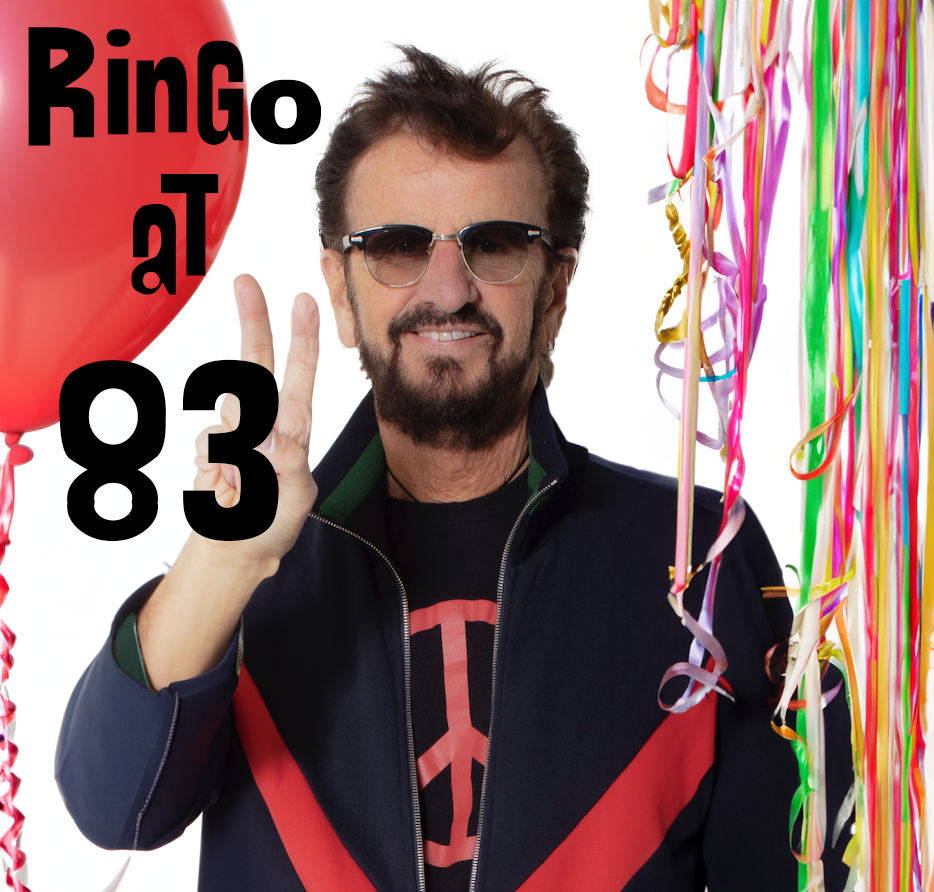
For those of you who don’t know, Ringo Starr became the drummer for the greatest rock ‘n’ roll band of all times, when he replaced their original drummer Pete Best. Once the Beatles became rich and famous, people started referring to Ringo as “the luckiest man in the world,” an assertion that I would dispute by referring to some statements made by, none other than, John Lennon. Mr. Lennon said that the Beatles probably wouldn’t have been the same without Ringo. And he also declared in an interview that before the Beatles hit the big time, Ringo Starr was the one who showed more possibilities of making it in show business.
It’s been said of Ringo that he is a natural actor, with an unaffected display of versatility, which has allowed him to play a variety of characters —in movies of decent reputation— such as a caveman, the Pope, Frank Zappa (in Zappa’s mind-blowing musical film 200 Motels), and even a Mexican gardener.
As a musician, Ringo is the most underrated drummer in rock. Mainly due to his lack of technical ability that he compensated with a very original way of playing, which got the job done more than well. He was a drummer that would not indulge much in drum solos (there’s only one on record, toward the closing of the album Abbey Road), because of the difficulty that being left-handed represented to him. Which, in turn, made his drum rolls come across in a sort of cool, syncopated way.
Ringo’s drumming style had the peculiarity of enhancing the quality of a tune, by focusing closely on the voice and melody, and catering to them. That made for an interesting way of making himself present in the band’s music dynamics, to the point that it is impossible to imagine songs like “Rain”, “Strawberry Fields Forever”, “A Day in the Life”, and “Come Together” without the drummer’s personal touch. Along those lines, I want to say something that has gone mostly unrecognized about Ringo, and it’s the fact that he was the first drummer to share the same prominence with his bandmates on stage, with his elevated-on-a-platform drum kit. In a way, that was a visual metaphor for his stylistic approach to drumming that contributed more to the form (versus basic backbeat) in a song. In other words, Ringo was actively involved in the shaping of a tune and the band’s stage presence. That was unheard of in rock ‘n’ roll before Ringo.
There are four drummers in rock music that can be considered the top ones in their respective styles, all four with a very distinctive approach: Keith Moon (The Who), Ginger Baker (The Cream), John Bonham (Led Zeppelin), and Ringo Starr. I would like to mention here, by the same token, that the offspring of the latter two are amongst the best drummers in the contemporary rock scene: I am talking about Jason Bonham and Zack Starkey.
Ringo was the one who made fewer mistakes during recording sessions, keeping always a perfect rhythm —“that rock-solid backbeat”, as George Martin called it— and making it easier for the other three to tag along. He was also the one to judge whether a song was working out. And he would say it bluntly, when something that they were working on was not good. Without mattering whether the author was John, Paul, or George. There’s a legendary episode where John is presenting something to the band, and he keeps going at it, trying to get them to like it, until Ringo says: “Hey, John. That’s shit.” Aggravated, hurt, and frustrated, John mumbles something, but he knocks it right off; and that was the end of it.
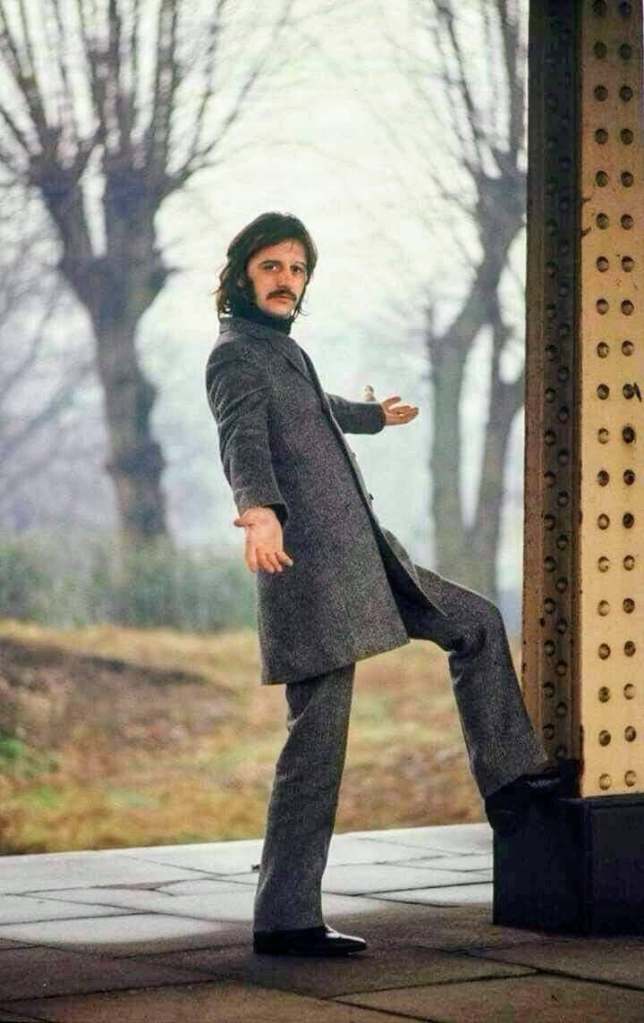
Morrison Hotel Gallery
So, definitely, it wasn’t luck what made Ringo Starr a Beatle. It was the fact that, just like John, Paul and George, he had something very special to contribute to the band. And it was actually Ringo, not Paul, the first one to walk out on the Beatles. After getting fed up with the other guys’ antics, during the recording of the White Album. They begged him to come back, and upon his return there were flowers all over his drum kit.
As a singer and composer Ringo has not done bad, at all. In fact, after the Beatles split, Ringo had a number one hit even before John Lennon. His songs “Photograph” and “It Don’t Come Easy,” which he co-wrote with George, put him on the charts at the #1 and # 4 positions, respectively. And there’s the cheeky “Back Off Boogaloo”, also co-written with George, where Ringo’s drumming is once again off the charts; cool as ever. There are two moving songs that he wrote to his dear pals George Harrison and Harry Nilsson: “Never Without You” and “Harry’s Song”. I included these songs for their double value, as tributes and as very well crafted love songs.
In the appearance that John made at Tom Snyder’s Tomorrow Show, in 1975, he discussed Ringo’s “disadvantage” when it came to writing songs, which was a concern to them after the split. “He didn’t have much of a writing ability. And he wasn’t known for writing his own material. And there was a bit of a worry that, you know, although he can make movies —and he does make movies, and he’s good at it—, how was his recording career gonna be. And in general, it’s probably better than mine!” And he laughs, as he says this with a self-deprecatory tone.
Ringo would also make wonderful cover versions of some oldies like “Only You,” “Hey Baby,” and “You’re Sixteen,” the latter becoming his second number-one. A tune that still gets air time on oldies and classic rock stations, all over the world. It was John who suggested “Only You” to Ringo and even made a beautiful arrangement for him. There’s a demo with John singing the song, accompanied by his guitar, as it would appear on the album with Ringo’s voice. And let’s not forget about “I’m the Greatest”, the gem that John wrote especially for Ringo, splendidly well written and arranged.
Ringo’s legacy, as we’ve seen, is a vast one. And it goes beyond his being a Beatle, or just riding that wave forever and resting on his laurels. A solid legacy of talent, dedication, hard work and perseverance.
To close my note I want to toast to the fact that Ringo still gets on the road, with a group of music enthusiasts called Ringo Starr and his All Star Band, all of whom are stars in their own right. Throughout time, the All Star Band lineup has included such hard hitters as Joe Wash, Jack Bruce, Edgar Winter, Steve Lukather, Gregg Rollie, Dr. John, Peter Frampton and Gregg Bissonette, to name a few. And, regardless of age or the lineup of the moment, it always makes for a tight, solid band of professionals that share the same inextinguishable passion for music. One of the highlights, as far as lineup is concerned, is the one that included Jack Bruce, Peter Frampton and Gary Brooker. Golden.
 Revolver Beatles Channel