In 1965 the Beatles were going through a transition. They had six studio albums under their belt and two movies: “A Hard Day’s Night” and “Help”. They were the biggest musical act and their popularity had expanded beyond the hysterical, screaming girls that filled up their concerts. The transition the Beatles were going through was from pop stars to serious artists.

In August of 1964, the boys had met Bob Dylan and he introduced them to marijuana, a substance they all dug and welcomed into their lives. After their initiation with Mary Jane, the Beatles started being more sensitive and responsive to their times, which began to reflect clearly in their lives, both musically and idiosyncratically.
Stylistically the music was shifting from the fast tempos of earlier hits like “She Loves You,” “I want to Hold Your Hand” and “Can’t Buy Me Love”, to a slower tempo and more sensible melodies. They were delving into a more acoustic and folkish sound, also, especially on some of John’s songs. They started, as he put it, “writing obscurely, à la Dylan, never saying what you mean, but giving the impression of something.” Undeniably, the lyrics on the songs were more profound, of a reflective mood, or more ambiguous. Not many upbeat tunes.
The mop tops recorded two albums that year, Help and Rubber Soul. And I want to talk briefly about two songs out of those two albums: “You’ve Got to Hide Your Love Away”, from Help, and “Norwegian Wood (This Bird Has Flown)”, out of Rubber Soul. In these two songs we can appreciate a more sophisticated and sensual way of making music. Curiously enough, both are about furtive or hidden love, and they were written by none other than John. Both songs also have the direct influence of Bob Dylan.
So the boys went from the prellies (the stimulant drug Prelludin) of their early days in Hamburg —which they took in order to keep themselves going, through the long hours of music they had to play in the German clubs populated by drunk, bellicose sailors. That’s, ultimately, how they earned their chops that made them the most solid, compact and distinctive band in the Merseybeat scene— to grass, and the transformation was obvious.
In 1965, Bob Dylan was big. The great sensation out of Greenwich Village, the folk singer-songwriter with a self-cultivated sage’s aura, who was part of the protest movement (that had in its ranks people like Pete Seeger and Richie Havens, carrying on Woody Guthrie’s legacy). The bard, who was chronicling his times —and those to come— in a proverbial way, enabled by his close acquaintance with the Torah and Judaism (which is also one of the things that makes Isaac Bashevis Singer’s stories so touching and full of humanity). He had gone electric and, in spite of the initial reactions, people dug him, big time. His fans thought he was cool and clever.
But Bob Dylan wasn’t as cool as John Lennon. There was some hesitancy in Dylan’s personality that came across in his interviews of the early years. As if he wasn’t completely sure about who he was or where he stood in the midst of the people he moved around. Also, if we’re going to talk real protest, there were people with a better testimony than Bob Dylan; people like Phil Ochs and Dave Van Ronk, for example. And John himself, who would use his name and money to promote peace in a more committed way, by doing things —though charged with a certain naiveté— out of the real goodness of his heart.
“You’ve Got to Hide Your Love Away”, is a Dylanesque song in a very straightforward way. Whether it was intended as a homage to Dylan, a nod, or just a pastiche, it is a remarkable tune. John is imitating the style of the folk singer, very clearly, but he keeps the spirit in accordance with rock ‘n’ roll ethos. By then, rock n roll had been around for over ten years and had already suffered some transformations, according to the styles of its different players; with the Beatles appointing themselves as it’s latest, strongest innovators.
There’s an interview with Lou Reed, where they ask him about rock ‘n’ roll. This was his answer: “You don’t want to actually listen to the lyrics of a rock ‘n’ roll record. For what? I mean, it’s not like when you read a book and come across a great line. It would be great if you got that in a song. Other than Dylan… not much there.” What is he talking about? Rock ‘n’ roll music was not conceived as a manifestation of literary or intellectual prowess. And that’s where the charm is; the freshness and ingenuity of colloquial language. Popular music is the artistic vehicle for the common man (or woman, for that matter) to express his feelings, impressions, and emotions in a simple way. All that vernacular poured in two and a half minutes of music.
Rock ‘n’ roll is about youth’s every day life occurrences (as inconsequential as dancing and partying; or as dramatic as getting a broken heart), narrated with an eloquent, simplistic and moving language (that moves you to dance, get excited, or sing along) and accompanied by inventive music. That’s makes rock ‘n’ roll one of the main contributors to pop culture, which spoke for a whole generation. Just listen to Chuck Berry’s and Carl Perkins’ lyrics; there’s a lot of poetry there.
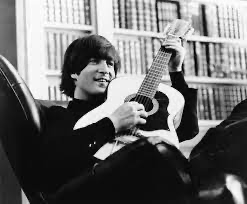
But coming back to “You’ve Got to Hide”, there is some real freshness and novelty to it. And just like in Chuck Berry’s lyrics, there’s inventiveness. There is music and there are words that resonate with the listener. Plus, the story John is telling here is shrouded in mystery, which adds to the tune’s mystique:
How could she said to me
Love will find a way
Gather round all you clowns
Let me hear you say
Hey, you’ve got to hide your love away
And the way of closing the tune. Instead of Bob Dylan’s trademark harmonica, there’s a flute, which replaces the evocation of American coffeehouses (where folk music flourished) with a European landscape; in rock n roll lingo. Pop music wouldn’t be the same after this. The Beatles were reinventing rock ‘n’ roll, pop, and modern music altogether.
‘Norwegian Wood’ is the first [pop] song that ever had a sitar on it,” said John Lennon about his creation. “Norwegian Wood” and “Think for Yourself” (George Harrison) are two songs that stand out on Rubber Soul, for their unusualness; the kind of sound that was announcing the Beatles’ aspirations to a more adventurous way of making music. Also the ambiguity of the lyrics, à la Dylan, but in a very cool way, just like in “You’ve Got to Hide”. Dylan himself said it: “Oh, the Beatles are great. But they don’t really play rock ‘n’ roll… They’re more adept.”
It was the Yardbirds, with “Heart Full of Soul”, and the Kinks, with “See My Friends”, the first bands to make rock songs with a touch of India (raga rock), by producing effects with the electric guitar similar to the sitar and the tambura, respectively. But the innovative aspect of “Norwegian Wood” lies in the fact that the Beatles used an actual sitar, played by George. And also the fact that the sitar here is not meant to evoke an Indian feel or raga sounds. In other words, they’re not trying to make raga rock or anything that had to do with Indian music. The use of the sitar is just to enhance the quality of the song; and that’s pretty clever. Which is what the Beatles always did, consistently; taking music to the next level.
I remember the first time I heard the tune, as a 10 year-old kid. I was mesmerized by the fact that a band that played popular music was capable of making such a delicate piece. Even at that age, I could tell that it took a special craft and talent to come up with something like that. And it only took me a couple of more years to realize that this band was capable of that and more. A lot more.
I sat on a rug biding my time
Drinking her wine
We talked until two and then she said
“It’s time for bed”
She told me she worked
In the morning and started to laugh
I told her I didn’t
And crawled off to sleep in the bath
Norwegian Wood was telling us early in the game that the Beatles were thinking outside the box; the lyrics, the voice, the melody, and the production. And, as I said before, the fact that they used sitar in an exclusively pop song, and not on a raga rock piece —or anything along those lines—, made it clever and ingenious. They weren’t so interested in following trends as they were in improving a song, and that made a big difference. The same way that George would make a difference a few years later, when he used slide guitar (sound mostly associated with blues) for non-blues songs.
The Beatles were passionate music listeners, before they were music makers. And they were
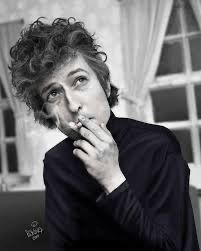
proud of that. Just the same way that Jorge Luis Borges took pride in the fact that he had read so many books; because he considered himself a reader, first and foremost. The Beatles grew up in the world of short wave radio that provided them with a universe of choices, coming from all different places across the Atlantic ocean; choices that were brewing in their psyches as musical influences. And one day it all had to come out. All the influences they were exposed to prompted them to make something of their own and take it to it’s last consequences. Just like they did with Bob Dylan’s influence.
By Rodolfo Elías
 Revolver Beatles Channel