By Rodolfo Elías.
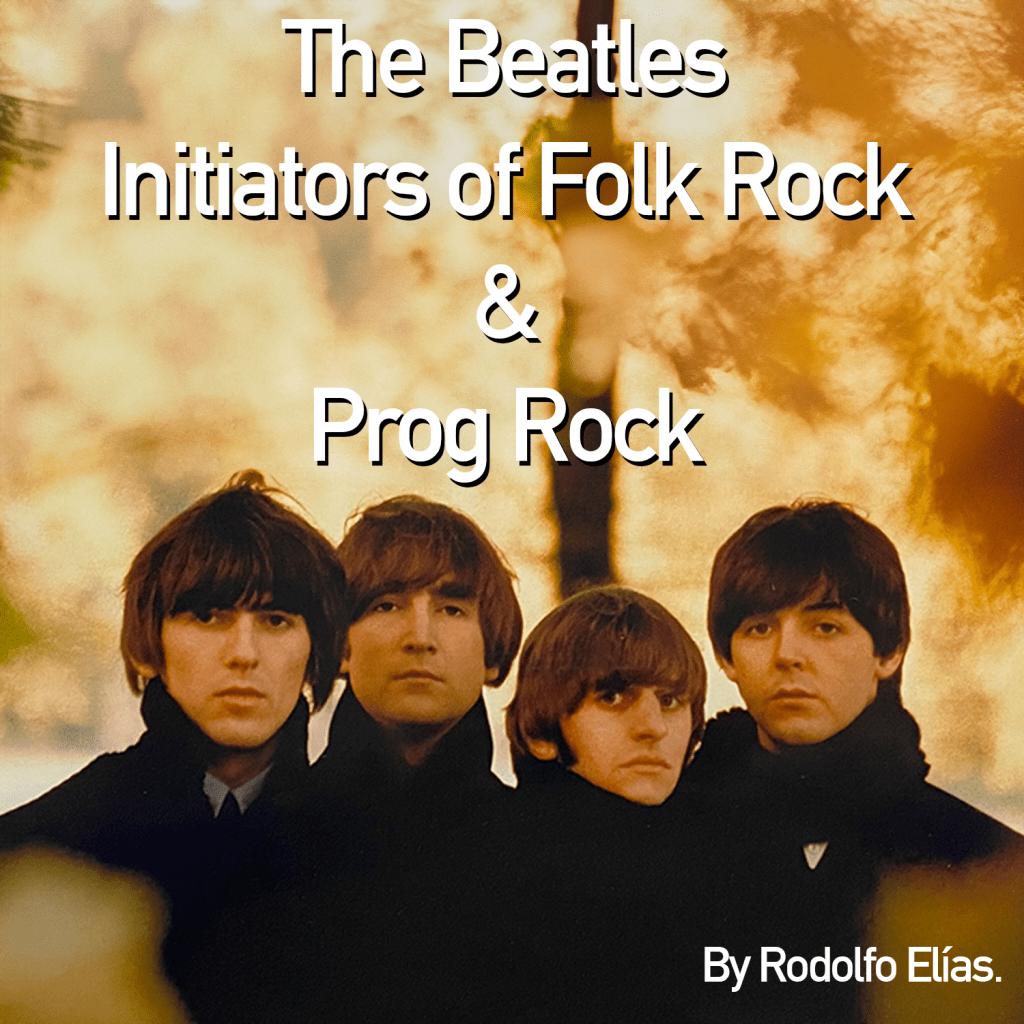
In the early 1960s, rock ‘n’ roll didn’t seem to have much future, as it had reached a point where it got stagnant and didn’t seem to be going nowhere. It seemed to be fading away, mainly because it had lost its state of novelty. Crazes and fads came and went, and nothing remarkable was happening anymore. But a great change was about to happen in the mid-sixties, when rock ‘n’ roll became rock and took a complete new course. And the Beatles are integral part of that change in a significant way. 1965 was the year when two new styles —one of which would take rock music to higher planes of innovation— were born: folk rock and progressive rock.
In order to get an idea of how dull and inconsequential popular music was in its approach and choices offered, all we have to do is take a look at the charts for 1963. It was mostly vocal groups, crooners and duos ruling. I mean, just to think of the fact that in December of that year The Singing Nun (an actual nun, who decided to try her luck on popular music) was on top of the charts, with the song “Dominique”. And Bobby Vinton was the hottest item. Things didn’t look too promising.
But 1964 rolled around and the Beatles climbed their way to the top of the charts, in early February. Then, on the fateful night of February 9, they made their first appearance on American TV, on the popular Ed Sullivan Show. Four smiling and fresh-looking youngsters appeared on TV screens all over the nation, with an aura of self-confidence about them. And, with their instruments they played five songs they had composed themselves with the exception of one. For the next three months the Fab Four topped the charts with “I Want to Hold Your Hand”, “She Loves You” and “Can’t Buy Me Love”.
The tunes that they played on Ed Sullivan’s give us insight —so early into the game— on their vocal prowess, musical inventiveness and originality. All they needed that night was five songs to conquer America and the world; with such a short setlist, the Beatles were already showing promise. What they were doing was different to what everybody else was doing; different to everything else that was out there in the mainstream. The release of the album A Hard Day’s Night, five months later, would confirm that. It showed the evolution of the Beatles as artists who kept perfecting their craft. From simple rock ‘n’ roll and pop tunes, they started evolving to a harder sound and more direct, pointed lyrics. Bob Dylan himself said it: “Oh, the Beatles are great. But they don’t really play rock and roll… They’re more adept.”
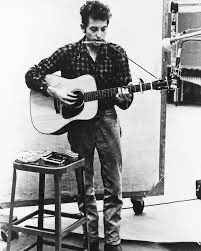
And the Fab Four were yet to close the year in style, with the release of one more album, in December: Beatles for Sale. It is here where things start getting really interesting. In August the boys had met Bob Dylan, who introduced them to marijuana. And after their initiation with Mary Jane they started changing their approach to music. Their lyrics were now more profound, of a reflective mood, or even more ambiguous. They had been impacted and influenced greatly, and they were going to take the Dylan influence far and beyond. The Beatles stopped being just a rock ‘n’ roll or a pop band; and it is this moment in time that marks the birth of folk rock.
“This thing about folk music that you could not find in rock and roll. Folk music had an emotional intensity, it had lyrical depth, it had many musical textures. And I think that’s why the marriage of folk and rock took place in the mid-sixties, because those were the things that rock and roll was interested in. And what folk was interested in about rock and roll, was the electricity, literally and figuratively; the sense of excitement and fun,” said legendary rock radio DJ, Pete Fornatale, known for the also legendary radio show “Mixed Bag”. Pete Fornatale was the FM radio icon who exposed progressive rock to a broader audience on New York City’s WNEW.
It just so happened that the mop tops were already thinking in conceptual terms, one way or another. But even though they started, as John put it, “writing obscurely, à la Dylan, never saying what you mean, but giving the impression of something,” with their rock ‘n’ roll roots there wouldn’t be room for any kind of intellectual solemnity, nor the earnestness of folk music’s lyrics. So, on Beatles for Sale, they started doing their own thing, which was exactly that: folk rock. And bands like the Byrds picked up on it. You can hear the effect of “What You’re Doing”, “I’ll Follow the Sun”, and —the Dylan influenced— “I’m a Loser” on the Byrd’s music; no doubt about it. Especially the direct influence of “What You’re Doing” on “Mr. Tambourine”, the first song by the Byrds to top the charts.
Yes, it is true that the influence would be mutual, because the Byrds also influenced two Beatles songs: “You’ve Got to Hide Your Love Away” and “If I needed Someone”. John and George were playing the same game —declaredly— with the Byrds, which was in tune with the game Paul started playing with Brian Wilson around the time when the Beach Boys put out their album Pet Sounds. And, even though John referred to Beatles for Sale as the “Beatles Western and Country LP,” it wasn’t but a folk infused rock ‘n’ roll album; and the rock ‘n’ roll covers in the record attest to it.
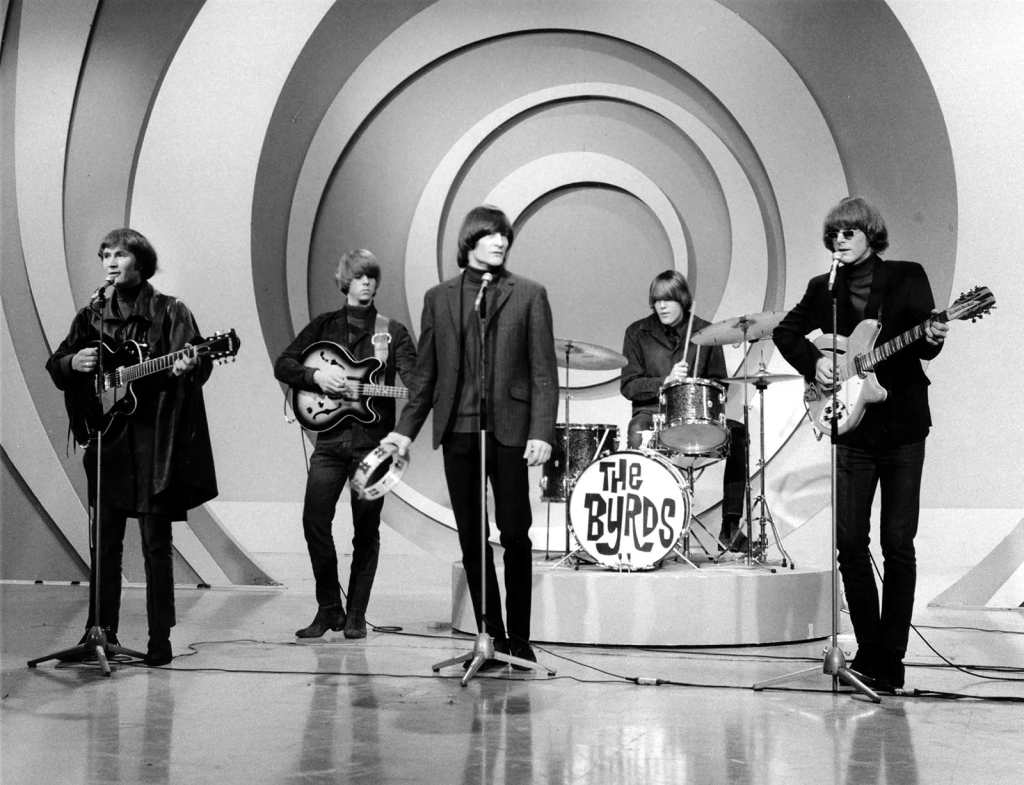
The acknowledgement of the Beatles decisive influence on the Byrds was there, as Roger McGuinn would state years later: “There’s controversy [about] who started folk-rock. Was it Eric Burdon and the Animals with ‘House of the Rising Sun’, because they were doing a Dylan version of a folk song? I don’t know. I’d say the Beatles started folk rock, because they’re the ones who inspired me to put folk music and rock and rolltogether. They were already doing it, subconsciously. They were playing folk rock, but they didn’t know it.” Beatles for Sale is the album that influenced the Byrds starting out, to be reaffirmed by Rubber Soul a few months later.
In the informative video The Birth of Prog, of his YouTube channel, musician and music commentator, Andy Edwards, talks about Bob Dylan’s influence on modern music. And he starts with Dylan’s initial calling: “What Bob Dylan does is he looks to this American folk music, a music that runs deeply in his country and his fellow people. And he sees, by taking the lead from Woody Guthrie, [that he can sing about modern ideas, modern thoughts and feelings of that generation, using that form of music. In doing this, he moves away from singing songs about driving cars and meeting girls; and he does this as the album emerges.”
In 1964 Bob Dylan was big already. The new sensation out of Greenwich Village; the folk singer-songwriter with a self-cultivated sage’s aura, who was part of the protest movement (that had in its ranks people like Pete Seeger and Richie Havens, carrying on Woody Guthrie’s legacy). The bard, who was chronicling his times —and those to come— in a proverbial way, enabled by his close acquaintance with the Torah and Judaism. Bob Dylan was hot and the Beatles dug him.
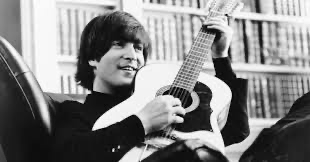
There are two Beatles songs that bear Dylan’s stamp: “You’ve Got to Hide Your Love Away” and “Norwegian Wood (This Bird Has Flown)”. And both are sung —by John— in a Dylanesque style. But in those two songs the influence is taken a notch higher, with small but significant twists. The way of ending “You’ve Got to Hide”, for example. John played harmonica, too; but, instead of Bob Dylan’s trademark harmonica, there’s a flute. Which replaces the evocation of American coffeehouses (where folk music flourished) with a European landscape. And for “Norwegian Wood”, they used a sitar. An innovative move that I’m going to discuss further down.
About Dylan’s second calling, when he went electric, Edwards says: “A chance meeting with the Beatles, in 1964, is not just revolutionary for the Beatles in realizing that Dylan’s a serious songwriter, and they can write serious songs about serious matters. But also, Bob Dylan seeing the success of the Beatles, realizes that he can transfer his acoustic folk music into an electric setting.” The Beatles were influenced in their association with Bob Dylan and that’s how they got into a folkish style of music; and Dylan, in turn, was being influenced by the Beatles. That’s how he outraged his purist followers, after he went electric with the album Bringing It All Back Home (1965).
Now, as far as how rock ‘n’ roll became rock is concerned. In his book, How The Beatles Destroyed Rock And Roll, author Elijah Wald points out the fact that with the Beatles and their contemporaries, rock ‘n’ roll lost two of its main features that got the masses to like it: simplicity and its danceable quality. As it became more sophisticated and artistically oriented. Ultimately, Wald’s observation was that the Beatles brought “the end of a musical era, rather than the beginning of one.”
A thing to remember is that rock ‘n’ roll was not conceived as a manifestation of literary or intellectual prowess. Rock ‘n’ roll was the artistic vehicle for the common folk to express feelings, impressions, and emotions in a simple way; all that vernacular poured in two and a half minutes of music. Rock ‘n’ roll is about youth’s every day life occurrences (as inconsequential as dancing and partying or as dramatic as getting a broken heart), narrated with a simplistic and moving language that moves you to dance, get excited or sing along.
Rock bands (consisting of musicians with extra long hair and loud instruments; as opposed to the clean-cut crooner of old and the teen idols) started writing their songs with a certain lyrical meaning, both socially and philosophically. People were changing the way they thought, the way they looked and the way they lived; with new existential concerns, other than just having fun and carrying on. In other words, music was not just to dance and be carefree anymore; it had a message now, even if a banal one at times. In their search for something more solid, in the USA they resorted to folk; and the blues did it for England. There’s a band that comes to mind: Graham Bond Organization; a peculiar outfit that played a big role in the shaping of the new music trends of the 60s.
Also, the dynamics in the recording studio —used now as an instrument— changed, which made for enhanced ways of expressing things and impressing them upon people. “Bands no longer need just rehearse the song in their rehearsal rooms or at the gig, and then just turn up and have the phonograph taken of their sound. They now could use the studio to create compositions; this, I think, is the integral genesis of progressive rock,” says Andy Edwards. And that’s exactly what the Beatles started doing after they stopped touring. Although they had gotten into some clever sophistication even before that, with songs like “Ticket to Ride” and “Norwegian Wood”. We are getting now into the birth of progressive rock.
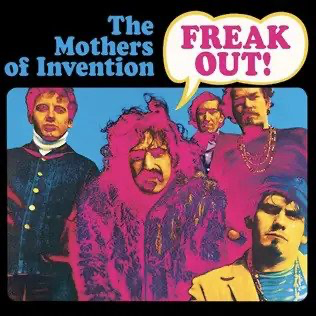
And I will start by saying that the Beatles were already displaying inventiveness and musical intricacy as early as the beginning of 1965, when they recorded “Ticket to Ride”, as part of the album Help!. “Hearing the song ‘Yesterday’ for the first time, to me that was the birth of so-called progressive rock, because it was… like a voice and a string quartet, coming from a rock… You know, from a standard sort of rock band liner. And I realized when hearing that that something was opening up,” said King Crimson’s Ian McDonald, about the song that was in the same album. Now, for a commercial group of non-virtuosos, that was a real feat. They were even ahead of Frank Zappa, since his debut album Freak Out! didn’t come out until almost a year and a half later.
That was just the beginning, because the Fab Four would follow up with one more song that year, “Norwegian Wood”, that also includes an innovation. It was the Yardbirds, with “Heart Full of Soul”, and the Kinks, with “See My Friends”, the first bands to make rock songs with a touch of India (raga rock), by producing effects with the electric guitar similar to the sitar and the tambura, respectively. But the innovative aspect of “Norwegian Wood” lies in the fact that the Beatles used an actual sitar, played by George. And also that the sitar here is not meant to evoke an Indian feel or raga sounds but to enhance the quality of the song; that’s slick. Thus, the Beatles were taking music to the next level.
Edwards attributes the beginning of prog rock to Bob Dylan, because of his lyrics and approach. But he states that “the Beatles can be seen in expanding the language of rock and roll, by moving to elements that they’d grown up with primarily: the Goons, music hall, Edward Lear, Alice in Wonderland. This surreal humor finds its way in with the Beatles. And a magical thing has happened in that their producer, George Martin, before working for the Beatles had been the actual engineer, using his compositional studio skills to create albums for the Goons and Peter Sellers; I feel that that is a very important aspect in the beginning of progressive rock.”
What Andy Edwards mentions above, happens declaredly with Revolver, in songs like “Eleanor Rigby”, “I’m Only Sleeping”, “Love You To”, “Yellow Submarine”, “For No One”, “Got to Get You into My Life” and “Tomorrow Never Knows”. And it opens the door to everything else after that that had anything to do with musical experimentation. With Revolver, the Beatles revolutionized not only what happened in the studio, but what happened before even going to the studio. When they took a song to the studio, they already had in their head the kind of sound —and effects— they wanted to pursue. And they started pursuing a non-existent technology that in a way they had to create, as a means of projecting their innermost thoughts and feelings. All that was only achieved with the help of the one that can very well be considered the fifth Beatle: George Martin.
Revolver is one of the most innovative (instrumentation, recording techniques, fancier chord structures, variety of styles, and clever lyrical contents) records in modern music; a pioneer in its own right. Perhaps some other musicians were already on that kind of quest before them, but it was the Beatles who did it from the standpoint of pop music, which was to be accessible to anybody. Revolver comprised the conceptual value of pop/rock as a whole (way ahead of its time), with eclectic variations of styles and forms that were made available to the common folk, through a commercial output. In Revolver there’s a song for everybody, for every taste, and for every state of mind.
That was just the tip of the iceberg. After Revolver, came Sgt. Pepper’s Lonely Hearts Club Band and Magical Mystery Tour, which took things even further, with music that was full of strange sounds, images and evocations. “Lucy in the Sky with Diamonds”, “She’s Leaving Home”, “Being for the Benefit of Mr. Kite!”, “Within You, Without You”, and the monumental “A Day in the Life”, from Sgt. Pepper; and “Blue Jay Way”, “I Am the Walrus”, and “Strawberry Fields Forever” out of Magical Mystery Tour. Songs that were a testament to the Beatles’ unstoppable drive for experimentation and innovation.
There are some really good prog rock bands. We have the Soft Machine and Camel with a concept that drew their influence from jazz. And we have bands like Yes and Emerson, Lake & Palmer, with a more classically oriented style. But King Crimson is the most ambitious of all. And they have explored different kinds of sounds and styles; different possibilities. The most prolific and versatile; with a wider vision. This is how leader, Robert Fripp, came to the decisive moment of his career: “One night, coming back from college, I think it was, I turned on Radio Luxembourg, and it was late. I had no idea who it was, and it was actually Sgt. Pepper. That incredible wind-up at the end of ‘A Day In The Life’, it terrified me. Shortly afterwards, I was listening to it all at once.”
He wouldn’t be the same after that and his fate had been decided. Just the way it happened to all the young musicians that listened to the album for the first time. “Although all of the dialects were different, the voice was the same. And at that time, I couldn’t say no. This one night where ‘A Day In The Life’ galvanised me was really the turnaround, I knew I couldn’t go to the college of Estate Management in South Kensington. One of 200 men and four women taking a degree in Estate Management,” added Fripp. And when we hear somebody like Robert Fripp talking about music like that, we better listen.
“People don’t understand how an artist like Frank Zappa is given permission to make an album like Freak Out!, when he heard Bob Dylan. And we can say pretty categorically, I think, that the beginning of progressive rock lies in that album,” Andy Edwards asserted; Frank Zappa as the initiator of progressive rock. There’s a trippy tune, “The Return of the Son of Monster Magnet”, in Frank Zappa’s Mothers of Invention’s first album that puts it at a different level. But, I still think that Revolver was more ambitious, ingenious, avant-garde and… progressive than Freak Out!

Frank Zappa went on to make a career based on Edgar Varese’s concept of music as “organized noise,” exploring all the possibilities to music. And he gave us some wonderful work, based on that premise. Although Zappa had his own reservations about the Beatles, due to their commercial success, he liked three songs: “Paperback Writer”, “Strawberry Fields Forever” and “I Am the Walrus”. He even was covering the latter on his live shows, toward the end of his life.
I think that the fact that Zappa didn’t acknowledge much the Beatles contribution to music might have even been jealousy. If the Beatles would had been an obscure band that had only recorded one album, Revolver, Sgt. Pepper or Magical Mystery Tour, Franz Zappa would had adored them.
As early as late 1964, the Beatles were showing the signs of a cutting-edge rock band; which gave place, first, to the birth of folk rock. And, in early 1965, they were already delving into the kind of musical sophistication (in the studio, with actual music) that gave place to the birth of progressive rock. And I’m closing with Zombies’ keyboardist Rod Argent’s statement, along those lines: “I actually think the Beatles were the first really progressive band. Because they were always expanding what they were doing.”
 Revolver Beatles Channel