“Most peculiar, mama. Whoa!” Was the closing line in the song, as the music started fading out. And I thought to myself: “That guy is mocking or trying to sound like John Lennon, somehow.” And I also thought of “Instant Karma.” It was early January of 1984, and we know what song I am talking about; one of the thirteen songs that John gave us in the last two albums that he would record in his life.
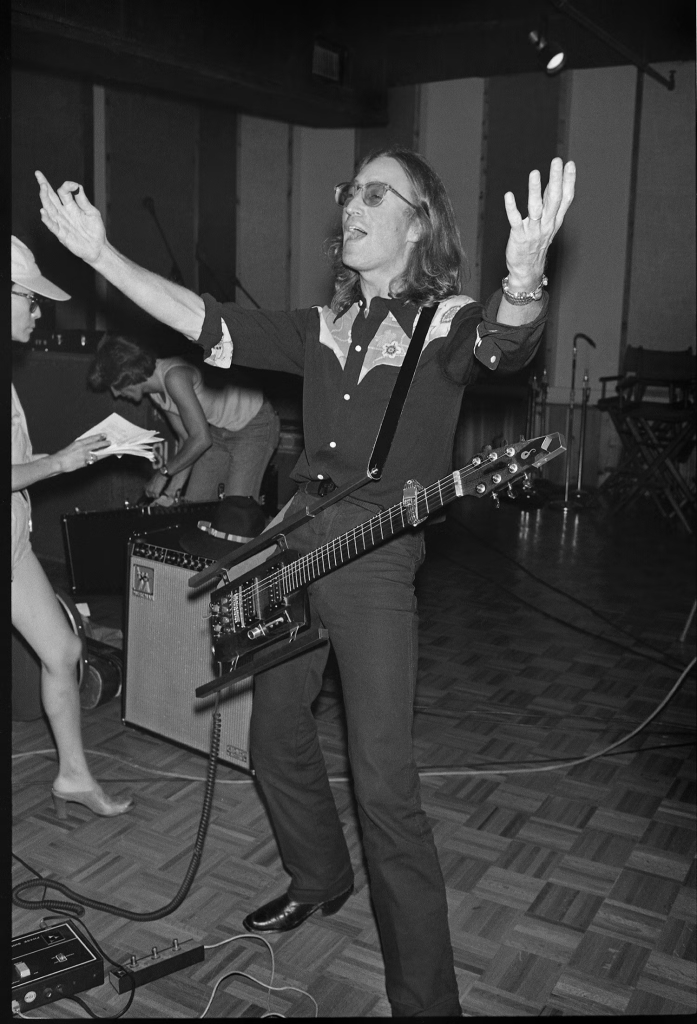
The reason I thought that someone else was trying to sound like John in “Nobody Told Me,” was because his voice sounded different to how it sounds on Double Fantasy. And the fact that the tune came out at a time when we weren’t expecting new music from John Lennon anymore; you know, after Double Fantasy and his assassination. So, the new single and subsequent album release was shocking in a good, hopeful way. And it had been all part of his comeback after his five years away from the public eye and the music world.
In 1975 John Lennon had gone into seclusion, a five-year hiatus to raise his newborn son Sean and break away from the frenzy of a rock ‘n’ roll lifestyle. That happened after celebrating his first number-one hit, released in September 1974; his subsequent appearance with Elton John at Madison Square Garden, that year on Thanksgiving; and right after his very last live performance in April, 1975, at the Waldorf Astoria, for the television special A Salute to Sir Lew Grade.
In the previous five years some impactful things had happened in John’s life: Beatles break-up; his arrival in New York City, where he’d make his permanent residence; the recording of the album Some Time in New York City and the two concerts at Madison Square Garden that were intended to be part of the One to One tour to follow the album; the infamous lost weekend, with his lover May Pang; the recording of four albums with original songs and the disjointed Rock ‘n’ Roll; and, to top it all off, the aforementioned number-one hit with the song “Whatever Gets You Thru the Night”.
For five years John Lennon was just another citizen in the Big Apple, with no more aspirations than to live a quiet domestic life. Reading the newspaper in the morning, with a cup of coffee and his cigarette, and raising Sean as a stay-home dad; or, as he liked to call himself, a househusband. Making music seemed to be a thing of the past, almost like a phase. During that time he got big into TV, as just another spectator in the audience, and listened to other people’s music, without the hassle of having to compete nor trying to get in the charts. Five years of unassuming bliss.
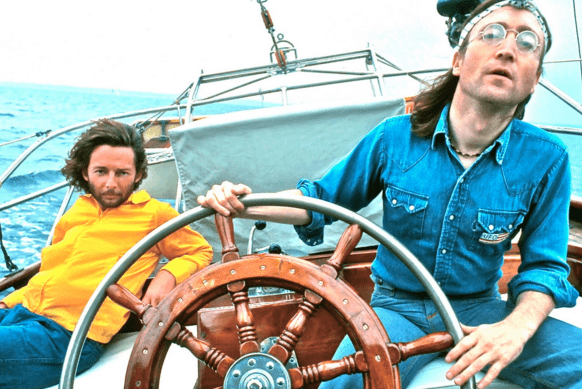
In June of 1980 he took a sailing trip to Bermuda and during a frightening sea storm John had a sort of epiphany, similar to Jack Kerouac’s “glowing white vision of God,” which Kerouac had aboard the Yugoslavian freighter that was taking him —across the Atlantic— from Brooklyn to Tanger. John came out with the inspiration to write songs after that (although, there are reports that he’d been hinting before that he wouldn’t mind start making music again). “Suddenly it all came through to me like, pow, in the form of songs, although it all must have been on my mind somewhere or other all these years,” he told David Sheff in his interview for Playboy. It was also in Bermuda where John got to hear Paul’s new single, “Coming Up,” which he liked.
In August, John Lennon was back in the recording studio after having recruited Jack Douglas as a producer; who, in turn, recruited some of the best session musicians in New York City: keyboardist George Small, guitarists Hugh McCracken and Earl Slick, bassist Tony Levin, and drummer Andy Newmark. According to Newmark, they had called Steve Gadd before him, but he never called back. “Thank you, Steve!”
So, in 1980, Mr. Lennon made his big comeback with two albums: Double Fantasy, with which he kissed the 70s goodbye; and Milk and Honey, the one he greeted —the most indicated for that— the 80s with. While the former still bears the candidness of the 70s, in gems like “Watching the Wheels” and “Woman” —with their beautiful instrumental embellishments—, the latter (which came out posthumously, three years after his death) has a more simple approach, characterized by the fast tempos of choppy guitars in songs like “Nobody Told Me” and “I’m Stepping Out.”
But most critics dismissed Double Fantasy as dull and lacking of substance. At least regarding John’s songs, because Yoko’s were better received. In volume 52 of Smash Hits, David Hepworth wrote that Lennon “sleepwalks through the project like a man who’s forgotten what music used to mean to him.” And has the nerve of calling the album, “dismal and terribly sad.” Sounds like he felt obligated to knock it down as part of a noble mission of the highest order.
In an unsigned little article, entitled “The Song Remains the Same,” music newspaper Record Mirror says: “‘STARTING OVER’ must be as numbingly representative a single taster for the rest of an album as there’s ever been. Nothing has changed in the Lennon universe, apart from the odd autobiographical update.” At least, this writer has some nice words for “Watching the Wheels,” of which he says that it’s “about as good as anything John has done since his first solo album. Though classically self-indulgent, coming from one so unnervingly capable of doing his own thing in his own time, it has a certain validity.”
English music journalist, Charles Shaar Murray, wrote on New Musical Express (NME) magazine: “The album celebrates their mutual devotion to each other and their son Sean to the almost complete exclusion of all other concerns. Everything’s peachy for the Lennons and nothing else matters, so everything’s peachy QED. How wonderful, man. One is thrilled to hear of so much happiness.” And Murray wishes “that Lennon had kept his big happy trap shut until he has something to say that was even vaguely relevant to those of us not married to Yoko Ono.”
Murray really seemed to have it out for John, because eight years earlier he had written a negative review about another one of John’s albums. Even though, funnily enough, the other record was going in the opposite direction of Double Fantasy: “The self-immolation of John Lennon’s musical/political credibility via the sublimely fatuous ‘Some Time In New York City’.” Now, about Fantasy, how is the same album going to go from being “dismal and terribly sad,” as Hepworth says, to the assertion Murray makes about it: “One is thrilled to hear of so much happiness”? Go figure.
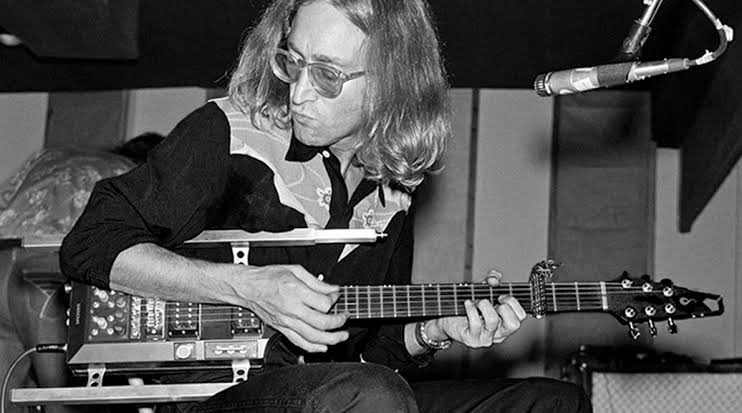
As for Milk and Honey, it didn’t fare so well, either. At least not with Rolling Stone magazine writer, Don Shewey. And the reason his review has some relevance, is because at the time Rolling Stone still commanded respect in the music scene. Shewey wrote: “The songs on the album don’t bear comparison to the work of such illustrious writers. Four of the six new Lennon compositions recycle basic rock & roll licks to accompany simple, repetitive, even clichéd lyrics (‘Living on borrowed time,’ ‘I’m stepping out,’ etcetera).” By saying that it is very obvious that the writer didn’t really grasp the lyrics of neither two songs. Are they clichéd because of the titles? They’re not clichés, they are concerns of a middle-aged man.
How are you going to find fault with lines like: When I was younger/Full of ideals and broken dreams, my friend, that are followed up with: Now I am older/The more that I see, the less that I know for sure? Or, Went to the kitchen/Lit a cigarette/Blew my worries to the sky, in “Stepping Out.” Also, in a display of unclever facetiousness —similar to a teenager’s, when he is trying to make fun of something just because he doesn’t understand it—, Shewey writes: “The most interesting Lennon song is also the album’s silliest. ‘(Forgive Me) My Little Flower Princess’ sounds like something translated from a corny Japanese opera yet rendered slightly ominous by two minor-key chords.”
Don Shewey was 30 when he wrote that mock of a review, and couldn’t make sense of what Lennon is saying in his lyrics. Was it the British accent, the English humor, or the generational gap? I mean, I was only 13 when I heard the album and it made perfect sense to me. It was the same good ol’ John at age 40. He wasn’t going to be singing about the Walrus, Mr. Kite or Sexy Sadie forever, and I understood that perfectly. I have a need for the music of John Lennon; and I don’t care if it’s his music of the early sixties, mid-sixties, late sixties, early seventies, or early eighties. It is, after all, John Lennon.
At one point, I also had a demeaning attitude toward these two albums, due mainly to the fact that they didn’t have the edge or rawness characteristic of John Lennon’s music. The main misleading factor was the saccharine of Double Fantasy. But it was done on purpose, because John wanted to make a pop album with a domestic feeling and without pretension; and he achieved it. In the process he’s bringing something fresh and simple, and the music still bears his distinctive style, with that touch of unusualness. Especially in songs like “(Just Like) Starting Over”, “Watching the Wheels”, “My Little Princess”, and “Nobody Told Me”, which have a real sense of uniqueness and strangeness to them.
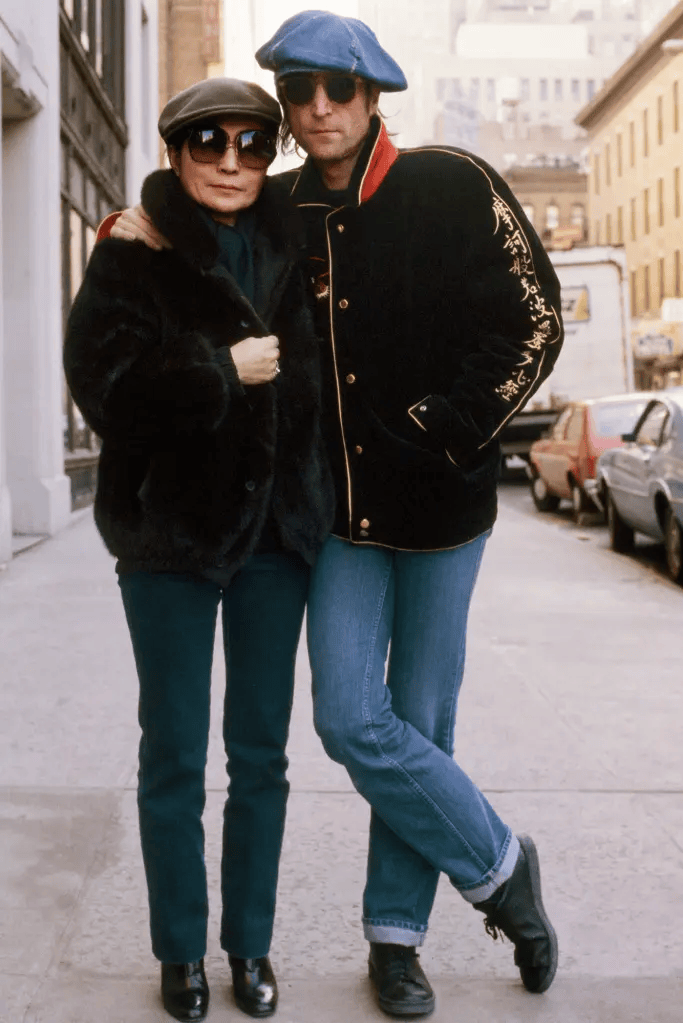
Over time, even people who lambasted Double Fantasy when it came out have learned to appreciate it for what it is: an unpretentious, well-crafted pop album, with excellent production and musicianship. In 1990, Rolling Stone ranked it in the position 29 of the best albums of the 80s. And, in a most recent review of the album, in November of 2020, it says of it: “Entering the Eighties, the production is sleek and refined.” According to Billboard Book of Number One Hits, after its release the single “(Just Like) Starting Over” had “moved erratically up the chart, from 38-32-10-9-8 to six, where it was positioned for the week ending December 6, 1980.” And that was before John Lennon’s assassination.
In May of 1980, Paul had put out his album McCartney II, about which Jack Douglas’ business partner, Stan Vincent, said: “Paul’s career was skyrocketing and John was quite pissed about that.” I don’t know how true that statement may be, but we know that John liked the single “Coming Up” a lot. And one thing about the whole situation, is that McCartney II is a bad, disjointed record with a serious lack of definition. Whereas Double Fantasy is an album with a real purpose and songs that —whether you consider them good or bad— are different to what was playing on the radio at the time; and they bear the composer’s distinctive musical stamp.
Let’s just think about something. If we make an album with some of the compositions that Lennon contributed with in Double Fantasy and Milk and Honey, it would amount to at least ten good songs in a solid single album. It would’ve caused a greater impact and it would show the merit of these ten tracks to their fullest extent. The album could be named Milk and Honey Fantasy or something along those lines. I want to review those tunes here.
So we start with Double Fantasy and the opening track, “(Just Like) Starting Over.” A rocker we know was John’s way of revisiting the music of his youth —that started it all for him— and channeling Elvis in a current format, as the fully accomplished composer and rock-and-roller that John Lennon was already. A beautiful love song, with a moving intro and sensitive melody, complimented with cool arrangements and production. Andy Newmark said of it: “It’s got that magic, that groove thing, the thing that musicians get off on.”
The following number is a solid, quintessential pop tune, “Cleanup Time,” that presents a refreshed and vital John Lennon to us, at his best as a recording artist. Well crafted tune with excellent musicianship (the way Tony Levin starts it off with the bass), along with the voice, phrasing and lyrics (No friends and yet no enemies/Absolutely free), all so clever. Soul, R&B, pop, rock, all met up in this number. No matter what naysayers said, John is in top form on songs like this one that show real intent and direction.
With the third number we have a rocker, again. “I’m Losing You” is typical John Lennon, with biting lyrics, forcefulness and edge. The opening guitar riff sets the mood right off the bat and the first few lines confirm our disposition for the blues. This could’ve easily been a single, because it’s got everything for it: beat, sound, lyrics, a universal theme (heartbreak) and commercial appeal.
Then, we have “Beautiful Boy (Darling Boy).” A touching lullaby —in John’s special way— written for Sean. Music with an atmosphere that gives you comfort and ease, just like ambient music; which proves John Lennon’s ability to write songs that go out of his rock-and-roller norm, with real emotional content. He had written a lullaby (“Good Night”) in the White Album before, for Julian, sung by Ringo.
“Watching the Wheels,” is the fifth song. A very well-crafted piece, different, with a special feel of unusualness to it. Only John Lennon could make a song like this one, with the kind of strangeness that songs like “Mind Games” have. The lyrics bear the simple philosophy of dealing with life on its own terms and allowing things to run their course, without trying to hold on to things that don’t belong to us anymore.
The last song out of Double Fantasy that I will cover is “Woman.” A simple, straightforward love song. And by simple, I mean simple in John’s very special way, which is full of little details (whispers, instrumental embellishments, key lines, real depth of the lyrics) that are perceived only as part of a whole, but that touch you in a more profound way when you become aware of those details. The harmonies blending with John’s voice make something special of this tune, evocative of his Beatles years.
Now we move on to Milk and Honey and its opening number, “Stepping Out.” Upbeat tune with direct lyrics that promote a healthy abandon, even though in one of the opening lines it speaks of lighting a cigarette, which is not politically correct these days; a beautiful, poetic line, nonetheless, from a bohemian standpoint. An interesting fact about this piece, is that even though it was released three and a half years after it was recorded, it didn’t seem dated, because of its sound and the fast tempos of choppy guitars, a characteristic sound in those days. Again, nice arrangements and musicianship.
For the following number, I’ll let Don Shewy say his thing, first: “’Nobody Told Me,’ the first single from Milk and Honey, begins promisingly with an energetic riff reminiscent of the Beatles’ ‘Eight Days a Week,’ but it immediately lapses into a routine melody with unevenly rhymed lyrics that barely make sense (‘There’s Nazis in the bathroom just below the stairs/Always something happening and nothing going on’).” First of all, it doesn’t have any similarity with “Eight Days a Week”, whatsoever. If anything, I would say “Instant Karma.” The lyrics are straightforward, clever, in tune with happenings of modern life. A low key —but effective— tune, with a cool rhythm and melody, and a good dose of uniqueness; à la Lennon.
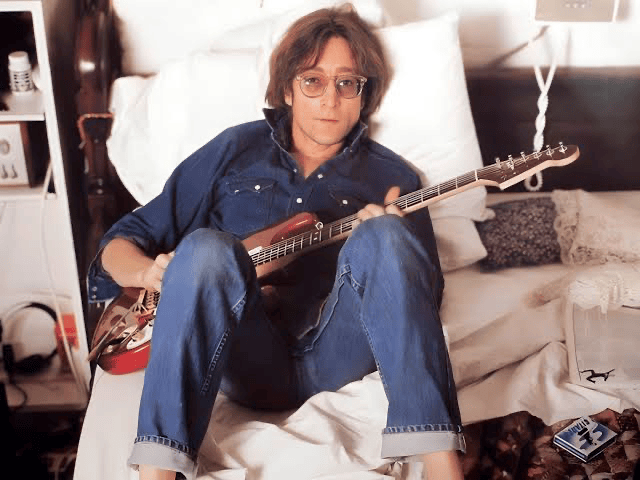
The next one is “(Forgive Me) My Little Flower Princess.” A minimalist, funky tune, in the style of “Bless You,” from Walls and Bridges. At first impression, it sounds a bit unfinished, and somehow you feel like there’ll be more coming up as you’re listening to it. But it has enough substance and resolution, and at the end you end up satisfied with what you get. Just as it happens with “I Want You (She’s so Heavy)” in Abbey Road, one of his last great achievements with the Beatles. And, once again, it shows John’s soulfulness and musical assimilation, and his ability to channel other styles when he incorporates exotic forms of music into his repertoire.
And last, but not least, “Grow Old With Me.” The song that wasn’t recorded in the studio; what we hear in the album is the actual demo. But this piece has a great significance because of the lyrics, the tender, soothing melody, and the message; which attests to the fact that John was a superb thematic composer, as we see it in his ability to write anthems, lullabies and this one. A song that can be sung at weddings, as the couple is exchanging vows, with the “until death do us part” kind of message: Grow old along with me/Two branches of one tree/Face the setting sun/When the day is done. There’s an improved, orchestrated version of the song and an awesome cover by Glen Campbell.
Some of the songs topping the charts during the release of Double Fantasy were “Lady”, by Kenny Rogers, Queen’s “Another One Bites the Dust,” “More Than I Can Say,” by Leo Sayer, Neil Diamond with “Love on the Rocks,” and Bruce Springsteen’s “Hungry Heart”; and Paul’s “Coming Up,” a few months earlier. All of which are good tunes, but nothing very special. Out of those, the only ones that really stand out for me are “Lady” and “Hungry Heart.” It goes to show how John Lennon was holding his own with his new music.
“As if he never left, John steps briskly into the main stream with this glorious pop-rocker from the forthcoming ‘Double Fantasy’ LP.” Was what Record World magazine said in its issue of November 1, 1980, of “Starting Over.” In his interview with Rick Beato, two years ago, Tony Levin —one of the most sought after bassists in rock/pop music in the past 50 years, who’s recorded with the likes of King Crimson and Peter Gabriel— stated that when meeting John in person and recording the songs that would be part of Double Fantasy and Milk and Honey with him, he wasn’t nervous nor starstruck. “But it was amazing. You know, it’s why we become musicians: to play great music.” Enough said.
By Rodolfo Elías.

